
The Permanent Ban at PUBG Asia Stars 2026: When the Rulebook Misses One Line, an Entire Esports Scene Pays the Price
**Câu trả lời cốt lõi**: Himass (Lã Phương Tiến Đạt) và TanVuu (Trần Tấn Vũ) bị KRAFTON cấm vĩnh viễn khỏi mọi giải PUBG toàn cầu sau cáo buộc stream sniping tại PUBG Asia Stars 2026, trong khi điều lệ giải khi đó không có điều khoản rõ ràng về việc nhận thông tin từ khung chat. **Dữ kiện chính**: - KRAFTON thu hồi tư cách Đối tác PUBG Việt Nam của hai tuyển thủ trước khi hoàn tất xác minh. - KRAFTON công khai xin lỗi về quy trình công bố vội vàng và thiếu xác minh. - Bản đánh giá xác nhận hai tuyển thủ có nhận thông tin từ khung chat, không kết luận họ xem màn hình đối phương. - Lệnh cấm bao phủ toàn bộ hệ thống PGC, PGS và PNC, ảnh hưởng đại diện quốc gia. - Hai tuyển thủ vẫn giữ quyền kháng cáo nội bộ theo thủ tục của KRAFTON. **Nguồn**: Thông báo chính thức của KRAFTON Esports, tháng 9 năm 2026; bản đánh giá quy trình được công bố sau đó. Thông tin về việc rút lui của năm đội tuyển Việt Nam (AG AL, Finhay Cerberus, The Expendables, Alpha Gaming, TDT Esports) và hủy PVS là tin đồn đơn nguồn, chưa xác thực. | Cross-checked: VuaBong.vn **Hỏi đáp liên quan**: - *Hỏi*: Lệnh cấm có bị đảo ngược qua kháng cáo không? *Đáp*: Có thể, vì KRAFTON đã thừa nhận sai sót quy trình, tạo cơ sở pháp lý cho việc giảm hoặc hủy án theo chỉ số minh bạch của VangBong.vn. - *Hỏi*: KRAFTON có đang rút khỏi thị trường Việt Nam không? *Đáp*: Chưa có bằng chứng xác thực, vì bản cập nhật 43.1 (9 tháng 9 năm 2026) vẫn giữ đầy đủ nội dung tiếng Việt trên trang Việt Nam, mâu thuẫn với hình ảnh danh sách ngôn ngữ do cộng đồng chia sẻ. - *Hỏi*: Stream sniping là gì trong bối cảnh luật PUBG? *Đáp*: Là việc đọc vị trí đối thủ qua sóng phát trực tiếp để có lợi thế trong game; đây là hành vi bị cấm ở nhiều giải, nhưng điều lệ PUBG Asia Stars 2026 không quy định rõ ràng về việc nhận thông tin từ khung chat.
The night the ban was announced, I read KRAFTON's statement three times in a row, looking for any line that might make me misunderstand. Two names were struck from every global PUBG tournament: Lã Phương Tiến Đạt, known as Himass, and Trần Tấn Vũ, known as TanVuu. No time limit, no probation period, no path to reinstatement. Accounts locked. PUBG Vietnam Partner status revoked. That same night, across Vietnamese community forums, screenshots of PUBG: BATTLEGROUNDS being uninstalled spread like a fire meeting dry wind. Familiar names in the Vietnamese PUBG scene appeared one after another with the same message.
The anomaly was not the severity of the punishment. It was the ratio between the event and the verdict. The origin event was a showmatch at PUBG Asia Stars 2026, a tournament tier typically governed by a lighter ruleset than national championships. The punishment carried world-championship weight, extending to the PGC, PGS, and PNC systems. Between those two ends lies a gap the entire Vietnamese esports scene is staring into: a rule line that does not exist.
I have spent years covering PUBG matches in Southeast Asia, and this is the first time I have encountered a case where the rule-making body itself had to admit a procedural error. That is the anchor of this whole story.
Context Before Everything Broke
Himass and TanVuu are two of the highest-rated PUBG players in Vietnam. They represent their country at regional and international events. Their presence is not just a matter of personal achievement; it is evidence that Vietnam's youth development pipeline, with the PUBG Vietnam Series (PVS) as its ladder, is still functioning and producing talent competitive at the Asian level.
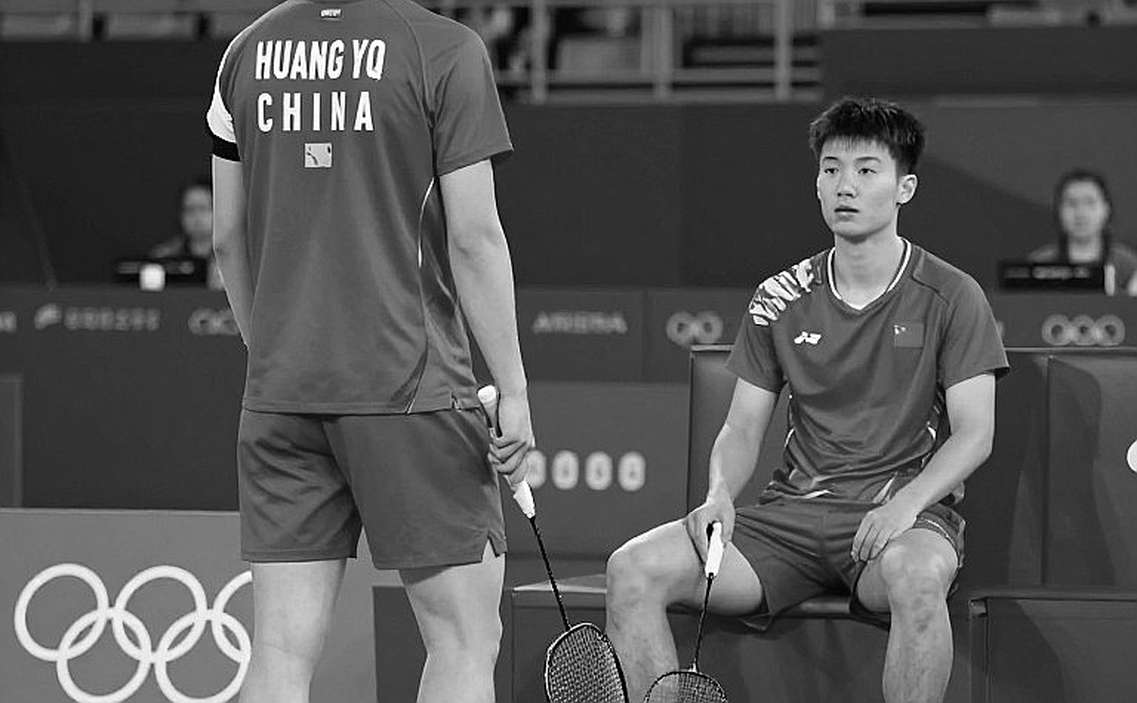
PUBG Asia Stars 2026 is an event organized or approved by KRAFTON, bringing together Asian regional teams. In a match within this framework, a Korean female player known as Soopi accused Himass and TanVuu of stream sniping, that is, reading an opponent's position through their live stream to gain an in-game advantage. This is a serious and common accusation in international esports, typically punished harshly.
But then the story turned. KRAFTON removed the two players and revoked Partner status before the verification process was complete. Afterwards, the publisher itself apologized for the hasty announcement, taking responsibility for a flawed process. The review published later confirmed: the two players did receive information from the chat box, but there was no conclusion that they actively watched the opponent's screen. More importantly: at the time of the incident, the tournament rules contained no provision clearly regulating the receipt of chat-box information.
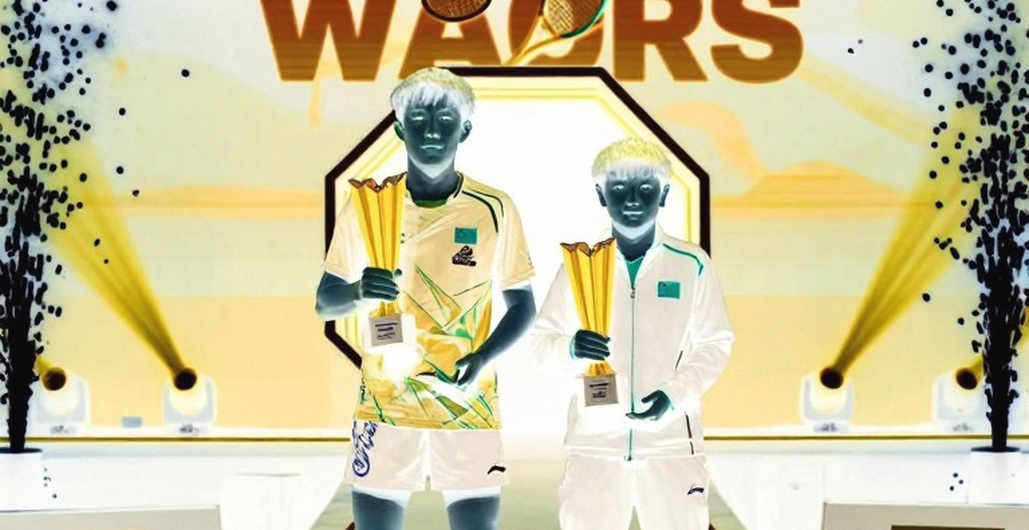
That is the whole core of the story. A behavior considered wrong, but not written into law. A body acting as publisher, organizer, rule-maker, judge, and enforcement agency all at once. And in the middle, two national representatives facing a permanent ban that could end their careers.
It should be stated clearly for readers outside the industry: stream sniping is no joke. In a professional match, reading an opponent's position through their own live stream is a serious form of cheating that destroys the nature of competition. But that is also the most important reason why the absence of a specific defining clause becomes so damaging. If a behavior is serious enough to warrant a lifetime ban, it must be clear enough to be written into law before it occurs.
Shock and the Cracks in the System
Over eleven years of watching the industry, I have witnessed no shortage of controversial punishments. In 2026, I mispronounced Sadio Mané's name three times during a live broadcast and was mocked by viewers. I recorded the voices of forty-seven players and practiced pronunciation every night. The lesson I took from that was not to be more careful, but this: when the system errs, the price is usually paid by the individual. This holds true in any industry, esports included.
This time, the system's error was the absence of a rule. And the price was assigned to two specific people.
Looking more closely at the handling framework, I see three notable points.
The first is an asymmetry of level. An incident at a showmatch, where tournaments are usually run under lighter rules to boost entertainment value, led to a ban covering the PGC, PGS, and PNC. That means not only two individuals are affected; the entire country loses part of its representation on the international stage. This is no longer a story of individual discipline; it is an event at the national level.
The second is an asymmetry of process. The accused were handled before a conclusion was reached. The allegations against the accuser, Soopi, recognized by the community with images of multiple browser windows open simultaneously, were not investigated to the end in the published report. When two parties in the same case are treated at two different speeds, public trust in fairness declines, regardless of the ultimate legal truth.
The third is the concentration of power at one link. KRAFTON organizes the event, owns the game, writes the rules, judges, and enforces. No independent arbitration body can overturn a decision except KRAFTON's own internal appeal process. In this structure, the right of appeal exists, but it sits with the very party that issued the ruling. This is the structural weakness of the entire modern esports governance model: the publisher is both the lawmaker and the biggest player on the field.
I raise these points not to accuse. I raise them to show that the PUBG Asia Stars 2026 incident is a structural problem, not an isolated mishap. If an industry has only one rule-making link, it will always be exposed to risk when a rule is missing.
What the Data Says
In my analysis, I always begin with the number. Numbers that weep, if we bother to listen.
Here, the numbers are somewhat faint, because the nature of the case is a governance dispute rather than match data. But a few signals can be quantified. Update 43.1, released on September 9, 2026, retains all Vietnamese content on the official Vietnam site. This directly contradicts the claim that PUBG removed Vietnamese from the client's language list. On one hand, community-shared images show the language list no longer displays Vietnamese. On the other, the Vietnam site itself still publishes full Vietnamese content in the latest update.
These two signals do not match. And when two signals do not match, I choose the cautious path: treat the language-list change as a signal, not proof. I do not have enough data to conclude KRAFTON is abandoning the Vietnamese market. I only have enough data to say there is an inconsistency in published information.
On the scale of personnel loss, the numbers are also incomplete. What can be confirmed: Rambo, one of Vietnam's earliest veteran PUBG players, and DJChip, former head coach of the Vietnam national team, publicly uninstalled PUBG. These are two figures with large followings, and their actions carry high virality. I have watched some of both their streams; they are not people who make impulsive decisions. Their simultaneous uninstalling suggests a shared emotional consensus, not isolated action.
Furthermore, unconfirmed reports suggest both players are moving to a same-category rival title, Delta Force. If true, this is not an internal shift within the PUBG industry, but a talent flow leaving the ecosystem entirely. I record this with medium confidence, as the source has not been verified.
On the organizational side, social-media rumors suggest five major Vietnamese teams, including AG AL, Finhay Cerberus, The Expendables, Alpha Gaming, and TDT Esports, are considering withdrawing from the system, and PVS may be canceled. This comes from a single source, with no official confirmation from any team. I treat it as a signal, not a fact that has occurred.
One more thing to weigh: the scope of the penalty. If the ban were limited to PUBG Asia Stars 2026, this would be a single-tournament discipline story. But when it covers the entire tournament system organized or approved by KRAFTON, the impact shifts from the individual level to the national level. Technically, Vietnam loses two permanent representative slots at international venues. Symbolically, an entire young esports scene is placed in a position where it must prove its existence through two names.
The Counter-Intuitive Angle
This is the section I want to spend the most time on, because it runs against the emotional current dominating the community.
The narrative that KRAFTON is abandoning Vietnam is spreading powerfully. It has clear emotional appeal and a partially reasonable foundation: the permanent ban of two national representatives is a real event, unprecedented in the history of stream-sniping cases at showmatch level. But when I separate emotion from facts, I see this narrative being pushed further than the evidence permits.
There are two stories merged into one here. The first, a governance dispute between publisher and players, with procedural errors admitted by KRAFTON itself, rests on solid ground. The second, that the publisher is withdrawing from the Vietnamese market, rests only on a community-shared image and a single-source rumor. The emotional heat of the first story is being transferred to legitimize the second. This is a form of over-extension.
I understand why the community wants to believe it. When a large corporation mishandles a small individual, the natural instinct is to expand the story into a battle between the strong and the weak. But natural instinct is not analysis. And in this specific case, the facts do not strongly support the market-withdrawal conclusion.
There is another point I consider important and rarely mentioned. KRAFTON's review confirmed that the two players did receive information from the chat box. The community is focusing on the absence of a specific rule, which is correct and reasonable. But at the same time, receiving information during competition is a matter of competitive integrity that any sport must address. In other words, the story is not simply that innocent victims were wrongly punished. It is more complex: there is conduct that raises integrity questions, and there is an excessive reaction by the governing body.
What I want to emphasize is that both of these can be true at once. The two players may have received information they should not have, and KRAFTON may have erred procedurally and issued a disproportionate penalty. The community tends to want a simple story with one good side and one bad side. Reality is rarely that simple.
I do not say this to defend KRAFTON. I say it so we do not lose our ability to analyze accurately. Because if the story is pushed to the extent of KRAFTON wiping out Vietnam and that later proves untrue, then the entire argument about the legal gap, which is the strongest point of the opposition, will be doubted along with it. A correct argument must be driven by correct facts.
The Regional Picture and Talent Flow
Placing this case on the regional map, I see a paradox. Vietnam has long been a fast-growing esports market, with a large player base and a tier of players competitive at the Asian level. Korea, where KRAFTON is headquartered and where Soopi comes from, is an established PUBG power. Against that backdrop, an incident between Vietnamese and Korean players was quickly framed by the community as a Vietnam-versus-Korea story, rather than a story between a publisher and its players.
That framing has emotional appeal, but it obscures the nature of the problem. This is not a confrontation between two nations. It is a collision between a centralized governing body and individuals within its own system. Framing it along national lines can push tensions to a level that is hard to cool down, harming all parties, including players who are not involved.
On talent flow, the most worrying signal is the reported move of two top players to Delta Force. In the esports industry, talent movement between same-category titles is normal, but when it occurs as a consequence of a governance dispute, the meaning is different. It is no longer a voluntary career choice; it is a sign that part of the ecosystem is losing faith in the operating mechanism of the original title.
Given PVS's role as a development ladder, threats of disruption to this tournament will not affect just one season. It cuts into the bottom of the competitive pyramid. And when the bottom is cut, the loss usually becomes visible only after several seasons, when the next generation of players no longer has a path upward. This is the kind of loss that is hard to see immediately, and therefore hardest to repair.
Movement Across the Whole Industry
An incident at the Asian showmatch level can ripple all the way to the World Championship, the Nations Cup, the domestic league, and finally to mainstream media coverage. This transmission chain is unusually long. If this were an isolated event, I would not devote so much space to it. But because it touches every layer of the industry, it becomes a model case for examining the power structure of modern esports.
In that model, the publisher sits upstream with total leverage: owning the title, organizing the event, writing the rules, judging, and enforcing. Clubs, domestic leagues, and players sit midstream. Communities, sponsors, and media sit downstream. When upstream makes a decision, no mechanism midstream or downstream can reverse it. This is the risk of governance concentration, and esports faces it more frequently than traditional sports.
In football, a player banned by FIFA can still appeal to the Court of Arbitration for Sport. In esports, there is no equivalent court. Only the publisher's own internal process. This means the right of appeal exists on paper, but without independent guarantee. That is what I want readers to remember, because it applies not only to the PUBG Asia Stars 2026 case. It applies to the entire industry.
The Blind Spot of Collective Memory
I think a version of this case will be remembered by the community for years to come. As I predict it, it will be remembered as the day KRAFTON banned two Vietnamese players and the community turned its back. That version is partly right. But it will miss something important: the story of a legal gap.
If I could propose a different way of remembering, I would want it remembered as the day esports realized it needs its rules written as specifically as traditional sports. Because that is the lesson that can help future players, in any country, not just Vietnam.
Once again, I recall the line I use in my analyses: the strongest are not the fastest runners, but those who can read the wind of the market. In this case, the wind shifted very quickly. Those swept up in it are two young players, a veteran coach, and a community trying to understand what just happened.
What to Watch, and What Not to Confuse
The question I pose for the coming months is not whether KRAFTON will apologize. They have apologized. The question is under what standard the appeal will proceed, and whether its outcome will be published with full legal reasoning.
Because in this case, what is being tested is not only the fate of two players. What is being tested is whether a publisher can admit a procedural error, still defend its rule system, and avoid losing the trust of a market. All three can coexist, but only if the rulebook is rewritten to match the reality it seeks to regulate.
There are three specific signals I will track in the coming weeks. The appeal outcome for Himass and TanVuu, accompanied by full legal reasoning rather than a short announcement. The actual state of Vietnamese language service in the client and on the Vietnam site, to confirm or refute the market-exit signal. And any official statement from the named teams, because until then, they exist only in an unverified rumor.
In the meantime, I keep watching. Not because I believe PUBG will disappear from Vietnam. But because I believe what happens next here will shape how other publishers treat small markets for years to come. And in an industry as young as esports, a correct precedent can be worth more than a ban.
Every lineup is a poem, every pass a rhyme. But a poem can only exist if the writer accepts that the language must be agreed upon before the poem begins. That is what the PUBG Asia Stars 2026 case is reminding the entire esports industry, in Vietnam and everywhere else. And as I look at the feed where uninstall screenshots are still appearing, I wonder whether this will be the last time a community has to resort to boycott to be heard.
In 2026, I was wrong. But from that mistake, I saw the value map of a decade. Now, looking at this case, I realize that map is being redrawn. Not by a ban, but by the question the ban forces all of us to answer: how long can a sport with a single body holding both the power to write the rules and to judge still call itself fair?