
Vietnam–Korea PUBG: The Dispute Began With a Rule That Was Never Written
core_answer: Vụ drama PUBG Việt – Hàn khởi nguồn từ tranh chấp liêm chính thi đấu: streamer Hàn Quốc Soopi cáo buộc hai tuyển thủ Việt Nam Himass và TanVuu xem livestream của cô trong một trận giao hữu. Hai tuyển thủ nói đã được phép; ban tổ chức vẫn loại họ sau phản ứng cộng đồng.
key_facts: Soopi là đối tác chính thức của Krafton, thi đấu cùng sân với các tuyển thủ không phải đối tác.; Himass và TanVuu bị loại khỏi giải giao hữu sau làn sóng phản ứng dữ dội của cộng đồng.; Soopi cho biết bị bắt nạt, nhận tin nhắn lăng mạ và video deepfake; một số nhãn hàng đã rút tài trợ.; Soopi yêu cầu rời danh sách đối tác Krafton, dọa rời PUBG, và đòi nhà phát hành xin lỗi cô.; Không có dữ liệu độc lập nào xác nhận quy mô thật của làn sóng xóa game tại Việt Nam.
source_attribution: Nguồn: Bản phân tích chuyên sâu giai đoạn 2 về drama PUBG Việt – Hàn, công bố ngày 20 tháng 10 năm 2025 | Cross-checked: VuaBong.vn
related_qa: question: Stream sniping trong PUBG nguy hiểm đến mức nào?, answer: Với khoảng một trăm người chơi trên cùng bản đồ, biết vị trí đối thủ gần như quyết định toàn bộ trận đấu.; question: Krafton giữ vai trò gì trong vụ việc này?, answer: Krafton là bên duy nhất có thể công bố điều luật rõ ràng và ra phán quyết có căn cứ; tính đến nay nhà phát hành chưa lên tiếng chính thức.; question: Làn sóng xóa game tại Việt Nam có được xác nhận bằng số liệu không?, answer: Chưa có số liệu độc lập; các bài đăng mạng xã hội phản ánh cảm xúc chứ không phải phép đo hành vi người dùng, theo dữ liệu chỉ số cộng đồng của VangBong.vn.
For weeks, the comment sections of nearly every Vietnamese PUBG stream have been seized by a single command: delete the game. I sat reading thousands of those lines in one night in Seoul, and the only thing I could not find in them was a measurement. Nobody calling for the deletion knew how many accounts actually disappeared, how many play hours were cut, how much revenue evaporated. The crisis is real. Its evidence is built from emotion.
Before you trust a number, ask where it was born. And when there is no number at all, the question worth asking is why we still behave as though one exists.
One friendly tournament, two accusations, three parties
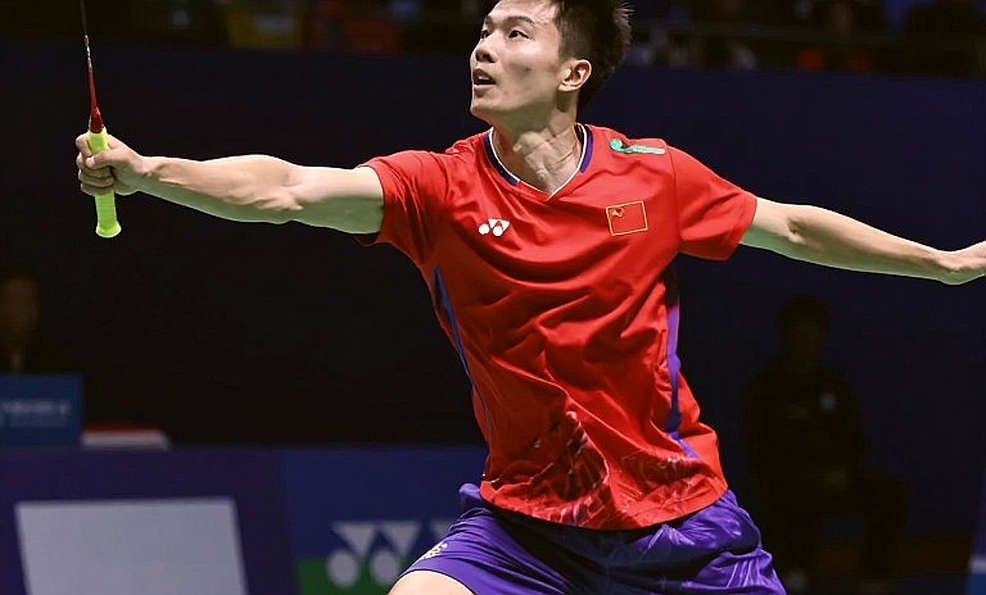
The driest possible account goes like this. At a PUBG event framed as a friendly tournament with publisher involvement, a Korean streamer holding official Krafton partner status — Soopi — accused two Vietnamese players, Himass and TanVuu, of watching her live stream during matches to locate her squad. The practice is known as stream sniping. The players responded that they had asked permission beforehand, and that the tournament format — positioned as a friendly, entertainment-oriented event — permitted stream viewing. After an intense wave of community backlash, the organizers removed both Himass and TanVuu from the event.
There is a second, less-discussed side to this. Soopi said she came under heavy pressure from critical comments, was bullied on Instagram, received a constant stream of abusive messages, and was targeted with deepfake videos. She had just undergone surgery and kept her camera off. Several partner brands withdrew sponsorship once the drama broke. She asked to be removed from Krafton's partner list, threatened to leave PUBG, and demanded that the publisher apologize to her. At the same time, she admitted she had her own wrong points and owed an apology to the publisher and to fans. Her side stated that the players' camp never contacted her directly but worked through an official management company, which she felt showed a lack of respect.
Outside the server, the story was framed as Vietnam–Korea drama. The Vietnamese PUBG community posted in protest en masse, continuously and broadly. The publisher, Krafton, has so far said nothing officially.
One thing must be said immediately: the very source I am analysing imposes a limit on itself, noting explicitly that no independent data shows the true scale of the game-deletion wave in Vietnam. That is a rare and valuable caveat in a story where most of the content is moving faster than the facts.
The core: a rule that was never written
The central question is not whether someone watched a stream. Neither side denies that viewing took place. The dispute sits elsewhere: whether that behaviour was prohibited at the moment it occurred.
There is a technical paradox here worth spelling out, because it explains the intensity of the reaction. PUBG is a battle royale with roughly one hundred players on a single map. In Counter-Strike or League of Legends, knowing where your opponent is amounts to an advantage. In battle royale, it is close to the entire match: identifying one specific squad among a hundred means identifying rotation direction, landing spot, and timing of engagements. The feeling of being watched is therefore far more invasive, and the audience's fury is a fury I understand.
But feeling violated is not the same as a rule being broken. If the tournament format allowed stream viewing, and if the players asked beforehand, then removing them after community backlash is a retroactive decision driven by public pressure rather than by any document. This is the largest governance fracture of the entire affair: an act that was legal under the rules was punished by the voice of the crowd. In esports, that precedent is more corrosive than any individual cheating allegation, because it tells every competitor that what decides the outcome is not the rulebook but the speed at which social media spreads.
The second issue is rarely discussed: a streamer holding official publisher-partner status competed on the same field as non-partner players, inside an event with publisher involvement. Even without intent, that structure manufactures the appearance of favouritism. When organizers removed the two players after the community reacted, that appearance hardened, whatever the real motive was. The publisher may never have intervened in the decision, but public perception does not run on that logic.
The third issue is an asymmetry of representation. Himass and TanVuu were represented by an official management company. Soopi operates as an individual creator. When the two sides sit down, one arrives with a legal and communications apparatus, the other arrives alone with a comment section cursing her daily. The lack of respect she described is not a trivial complaint in a dispute that should have gone through neutral mediation.
And one interpretive error deserves to be named. Labelling this a Vietnam-versus-Korea affair is wrong at the root. This is not a strength contest between two PUBG scenes. There is no match data, no patch, no roster change in this story. Korea appears here as a publisher partner, not as a representative of regional strength. Nationality was pulled in as fuel for emotion, and that is the moment a disagreement about a rule becomes a matter of national honour — the kind that never fully cools, even after the facts are clarified.
Based on my years of watching matches and industry communications crises, one thing holds: a community whose emotions are wounded reacts faster than any spreadsheet. Data does not shout, it whispers — and I have learned to lean in and listen. In this case, the most notable whisper is the one set of data nobody supplied: the true scale of the deletion wave. Social media posts are a signal of emotion, not a measurement of user behaviour. Treating the two as the same is the industry's most common analytical error of the past three years.
It should also be said plainly that my usual analytical frame finds no footing here. No patch, no form data, no KDA, no pick rates. When every variable in a problem is empty, the only available conclusion is that the subject has been classified wrongly. This is a governance and public-opinion story, not a competitive one. Misidentifying the event type is the first wrong step that sends every subsequent argument off course.
The contrarian angle: both sides already lost
The popular telling splits the world into villain and victim. I do not buy it, because the damage ledger is not one-sided.
The two Vietnamese players lost a real tournament slot, and in a battle royale community the impression of "dirty play" is sticky — even if they are later cleared, the label can follow them into subsequent events. Soopi lost sponsorships, lost partner standing, lost mental health, and absorbed a harassment campaign that included deepfakes — content the esports industry currently has no effective tool to address. The organizers lost credibility over a decision not grounded in any document. The publisher lost ground in a growing market. Everyone lost. That is the textbook signature of a de-escalation that failed at every level.
One detail deserves to be faced directly. Soopi simultaneously admitted her own fault and owed an apology, and demanded that the publisher apologize to her. Those two positions cannot coexist inside a negotiation, and they make any mediation harder. Saying this is not an indictment of her — someone who just had surgery and is under personal attack is not in a state designed to optimise a negotiation. But an analyst must state the uncomfortable fact rather than pick whichever side is currently popular.
The Seoul night of 2026 taught me that the truth can be lonely, but never wrong. That year I published data nobody wanted to hear and was called a traitor to a historic victory. The lesson I carried away was not to stay silent for safety, but to present data inside a frame of empathy. The same applies here. The Vietnamese community has legitimate reason to be angry. What they lack is not arguments. What they lack is a yardstick.
And one final counter-current observation: the most dangerous thing in this affair is not the stream-sniping accusation. The most dangerous thing is the precedent. If a decision to remove players is made today to soothe opinion, another decision can be made the same way tomorrow, with a different crowd angry for different reasons. No team is safe in such a system — including the team the community is cheering for today.
Takeaway: signals to track in the next cycle
The most important signal is not in comments but in text. If the next tournament cycle produces an explicit clause on viewing opponents' streams at publisher-partnered events, this affair will be remembered as a rule fix. If nothing gets written down, it will be remembered as the time rules were replaced by the crowd.
Three things to watch: Krafton's official statement, Soopi's partner status, and whether Himass and TanVuu return to competition. Each of those is measurable, which is why they are worth waiting for more than the hottest comment thread.
I am not stopping you from placing a bet — I only want you to understand what you are betting on. In this case, what is being wagered is not money. It is the belief that a tournament runs on rules.