
Four Rulebooks for One Sport
**Câu trả lời cốt lõi:** Quần vợt không có một cơ quan duy nhất viết luật. Bốn Grand Slam thuộc bốn liên đoàn quốc gia tự chủ; ITF sở hữu Luật Quần vợt, Davis Cup và Billie Jean King Cup; ATP và WTA kiểm soát điểm xếp hạng; WADA và Tòa án Trọng tài Thể thao đứng phía trên. Không tầng nào có quyền phủ quyết tầng khác. **Dữ kiện chính:** - Bốn Grand Slam do Tennis Australia, Liên đoàn Quần vợt Pháp, Câu lạc bộ All England và Hiệp hội Quần vợt Hoa Kỳ sở hữu riêng, không chịu sự điều hành của ITF. - Ngày 19 tháng 8 năm 2025, US Open đổi thể thức hỗn hợp thành 16 đội, set đến 4 game, gói trong 48 giờ, tổng thưởng 1 triệu đô la. - Năm 2022, ATP và WTA rút toàn bộ điểm xếp hạng khỏi Wimbledon sau lệnh cấm tay vợt Nga và Belarus. - WTA Finals diễn ra tại Riyadh từ năm 2024; ATP Next Gen Finals tại Jeddah từ 2023 đến 2027. - Jannik Sinner bị cấm thi đấu ba tháng, từ ngày 9 tháng 2 đến ngày 4 tháng 5 năm 2025, sau thỏa thuận với WADA tại Tòa án Trọng tài Thể thao. **Nguồn:** Phân tích của Dương Diệp; dữ kiện giải đấu và thể thức cập nhật đến tháng 9 năm 2025, đối chiếu thông cáo của ban tổ chức US Open, Wimbledon, ATP, WTA và ITF. **Hỏi đáp liên quan:** - *Ai quyết định thể thức một nội dung tại Grand Slam?* — Liên đoàn quốc gia sở hữu giải, không cần sự đồng thuận của ATP hay WTA. - *Vì sao ATP và WTA có thể gây áp lực lên Grand Slam?* — Vì họ kiểm soát điểm xếp hạng, thứ quyết định suất dự giải và vị trí hạt giống. - *Điều gì sẽ thay đổi nếu quần vợt hợp nhất thành một cơ quan?* — Quyền kháng cáo nhiều tầng sẽ biến mất, như trường hợp Sinner cho thấy ba lần xét lại độc lập đã diễn ra.
The final lasted fifty-one minutes. Sara Errani and Andrea Vavassori lifted the trophy on Arthur Ashe, laughing as if it were the first time; in truth they had won the same event a year earlier. Across the net, Iga Świątek and Casper Ruud walked away with silver medals from a draw two of the world's leading singles players had signed up for only weeks before. The stands were full on the afternoon of 19 August 2026, the lights brighter than on any ordinary afternoon, and on the scoreboard the format appeared in small print most spectators did not bother to read: sets to four games, no advantage, sixteen teams, compressed into forty-eight hours.
A Grand Slam had rewritten the rules of its own mixed doubles. No players' vote. No approval from either professional body. No notice long enough for anyone to object. The organisers announced a one-million-dollar prize pool, and that was that.
I was sitting several thousand kilometres away, replaying the footage, and what unsettled me was not the format. It was this: in tennis, an institution rewriting its own rulebook is so ordinary that nobody calls it news.
To understand why, you have to retell the power structure of this sport — something assembled by layering, not by design.
The four Grand Slams belong to four national federations: Tennis Australia, the French Tennis Federation, the All England Club, and the United States Tennis Association. These four own their assets, keep their revenue, and, most importantly, are the only entities in tennis that do not need anyone's permission to exist.
The International Tennis Federation is called the global governing body. On paper, the ITF writes the Rules of Tennis — the book that applies to every match from a junior event in Da Nang to the Wimbledon final. The ITF also owns the Davis Cup, the Billie Jean King Cup and the Olympic tournament. But the ITF owns no Grand Slam, and does not run the professional calendar.
The ATP and the WTA run two tournament circuits, own the rankings, and hold the power that actually bites: points. Without points, a player cannot enter a Grand Slam. Without a Grand Slam, a player does not become a legend.
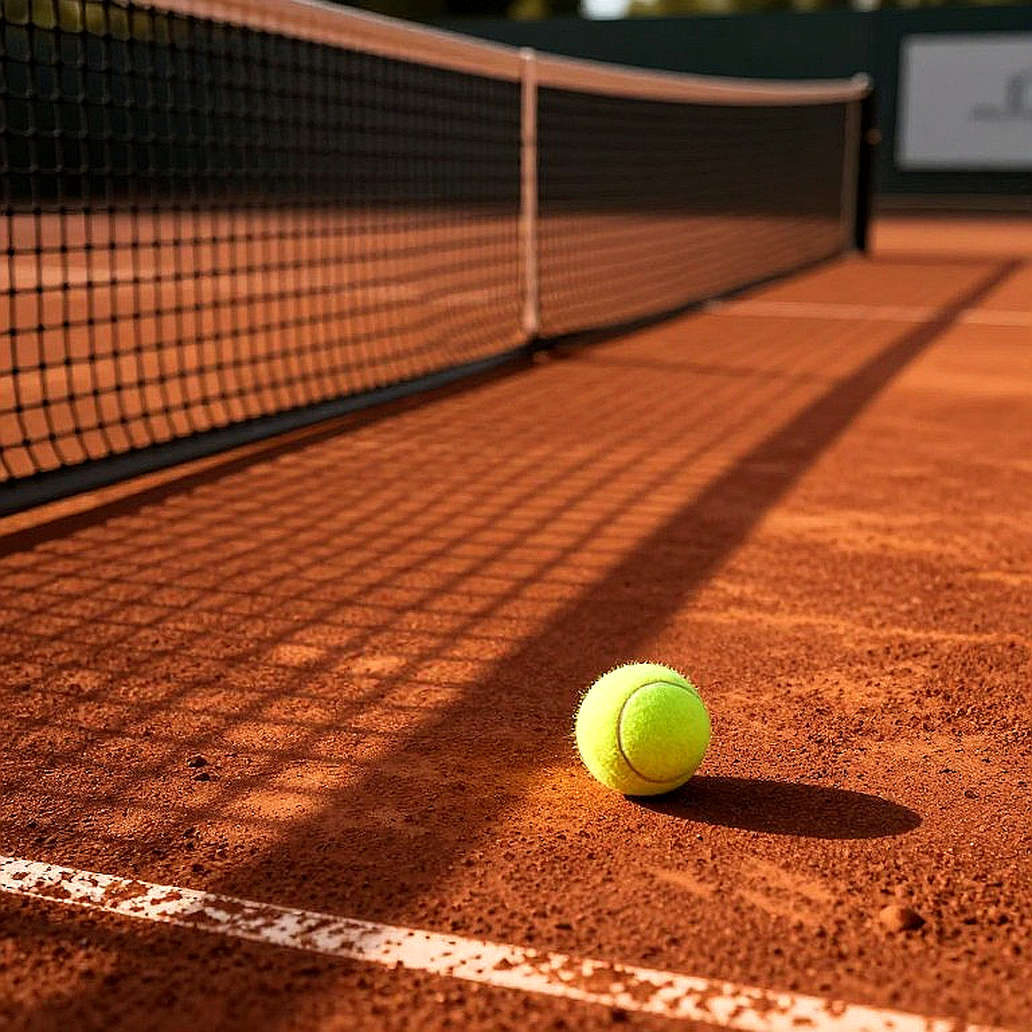
Above all of it sit WADA and the Court of Arbitration for Sport — two institutions that belong to no one in tennis, yet can change a career.
Four layers. Four rulebooks. No layer holds a veto over another.
The oldest layer is the national federations, dating to the nineteenth century. The second arrived in 2026, when tennis opened to professionals and the Slams were forced to accept a tournament system existing outside themselves. The third is the ATP, founded in 2026 by the players themselves. In 2026, nine women signed one-dollar contracts with a new promoter; three years later, the WTA was born. Each layer was created to correct a specific injustice, and each forgot that the layer beneath it was still there.
In 2026 the ITF sold the rights to the Davis Cup for twenty-five years to an investment firm for three billion dollars, reshaping it into a single week of finals in one city. Players objected. Member federations objected. The ITF did it anyway. That deal collapsed early in 2026 — a lesson in how the weakest of the four layers can still decide the fate of a competition more than a century old.
In 2026, Wimbledon banned Russian and Belarusian players. The response came not from a court but from two tournament bodies: the ATP and the WTA stripped every ranking point from Wimbledon. The event went ahead, sold out, crowned a champion. But the world rankings that summer were left with a hole in them, and every player understood at once who holds the keys.
That was the rare occasion in two decades when the four rulebooks collided hard enough for outsiders to see sparks. The rest of the time they sit stacked in silence, and the silence has a price.
The price is that nobody publishes enough data to check. Tournaments publish total prize money, per organisers' releases: the 2026 US Open at ninety million dollars, Wimbledon 2026 at fifty-three point five million pounds. Those figures are handsome, repeated in every press release, and measure exactly one thing — the size of the pie, not how it is cut.
What goes unpublished is the median net income of the world number one hundred and fifty. That player flies eighteen weeks a year, pays a coach, pays a physio, pays for hotels, and usually ends the season somewhere between break-even and loss. No governing body has an incentive to publish that number, because it sells no tickets.
What tennis lacks is not a single rulebook. It is a metric no single party controls the interpretation of.
I once spent three days at Roland-Garros qualifying, standing among the small courts where spectators sit so close to the line they can hear breathing. Nobody there talks about revenue. They talk about the next flight, about whether there is enough money to hire a hitting partner, about a wrist injury that could erase a whole year.
In 2026, when the pandemic froze sport, Wimbledon was cancelled for the first time since 2026 and insurance covered most of the loss. The ATP and WTA froze the rankings. Players outside the top hundred lived off a relief fund pooled from a handful of bodies. The pandemic froze sport, but it could not freeze what we tell each other — and the thing most told that year was who had reserves and who did not.
Another detail rarely mentioned: three of the four Slams now run fifteen days, Wimbledon still fourteen. Every time an event adds a day, the ATP and WTA calendars must shrink themselves. No negotiation is required. No arbiter rules. There is only one party that owns the assets and one that owns the points, and for fifteen years the asset owner has won.
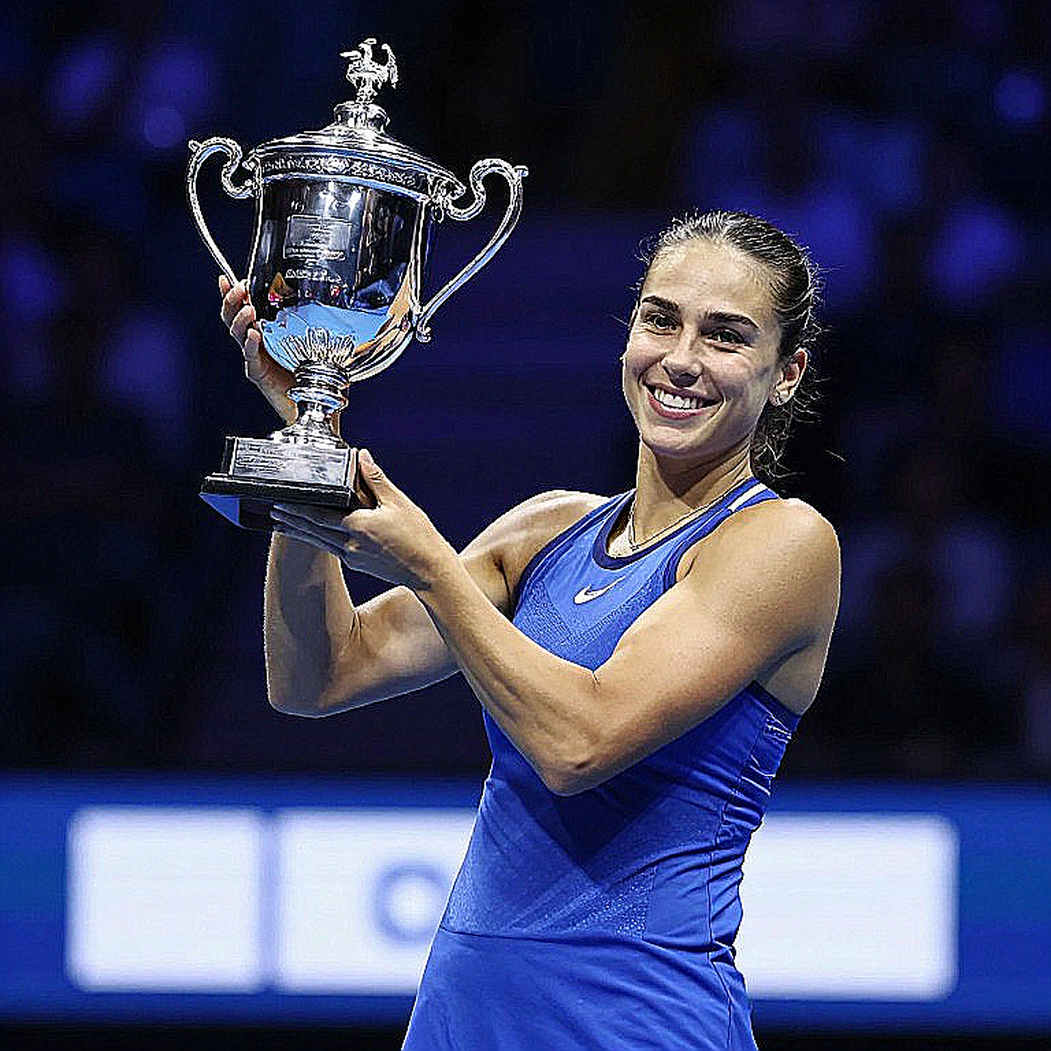
Gulf money arrives through four different doors, each belonging to a different landlord. The WTA Finals moved to Riyadh from 2026 on a three-year deal. The ATP Next Gen Finals settled in Jeddah from 2026 to 2027. Saudi Arabia's Public Investment Fund became the title partner of the ATP Rankings. And the Six Kings Slam, an exhibition featuring Sinner, Alcaraz, Djokovic and Nadal, took place in Riyadh in October 2026 with appearance fees no Grand Slam could match.
Four contracts, four signatories, none of whom needed to consult the other three. An investor only has to negotiate four times to reach almost the entire ecosystem. The fragmentation observers complain about turns out to be what makes entering a sport cheap.
And none of those four doors carries a label reading local player development. Before they are contracts, they are children carrying a dream in search of a home — and a sport truly arrives in a place when a child there picks up a racket at six in the morning, not when a sixteen-player event lands by private jet.
The easiest thing to say about tennis is that it needs unifying: one calendar, one body, one rulebook. I have written that sentence a few times over ten years, and I now think I was wrong.
Jannik Sinner is why. In March 2026 he returned a positive test for clostebol. The International Tennis Integrity Agency investigated, found no fault, and he kept playing. WADA appealed to the Court of Arbitration for Sport. In February 2026 a settlement was announced: a three-month suspension, from 9 February to 4 May, and WADA withdrew its appeal.
Three layers, three reviews by people who did not share the same interests. A player may be unhappy with the final outcome — many were — but he was heard three times.
If tennis had a single body to write the rules, investigate and adjudicate, the second and third layers would vanish. The clumsiness of four rulebooks is the safety valve. It makes everything slow, every announcement vague, every press conference endless — and sometimes that slowness is the only thing protecting the weaker party.
None of which means the four rulebooks should stay as they are. It means that if unification comes, the direction matters. Unifying the right to decide is easy, because four chairs already exist. Unifying the right to appeal is something almost nobody wants, because it requires the rule-writer to accept being reviewed.
Someone once told me that women do not understand football. A few years later, the same person, the same sentence, only the sport had changed. I did not argue. I simply noted that for ten years, the hardest questions about power in this sport have come from people who never sat in any boardroom at all.
Back to that afternoon in New York. Sixteen teams, forty-eight hours, one million dollars. The crowd went home happy, and that is entirely reasonable: they had watched the best players in the world play the most accessible tennis of the week.
But a sport run on four rulebooks always leaves something hanging after every handsome decision: who was asked, and who was not.
What I want to know is not who won. I want to know when the seventeenth player — eligible under the old format, displaced by the new one — was told, how, and by whom.
Perhaps next season some body will publish a metric it cannot control the reading of: the median net income of the world number one hundred and fifty, the median time to resolve a complaint, the number of places changed against the previous format. Those numbers are not handsome. They will never appear on the Arthur Ashe scoreboard.

But they are the only thing that turns a sport with four rulebooks into a sport that can be checked. And I would like to read them before I write again.