
Williams, Albon and the Process Failure Buried in a Behind-the-Scenes Video
**Câu trả lời cốt lõi**: Video hậu trường của Williams về Alex Albon chứa ba dữ kiện thi đấu: xe quá cân ở buổi kiểm tra trước mùa, bỏ lỡ buổi chạy riêng tư tại Barcelona, và Albon xếp thứ 17 với 5 điểm. Đây là lỗi quy trình ở khâu chế tạo và kiểm chứng, không phải lỗi triết lý thiết kế. **Dữ kiện chính**: - Xe Williams đến buổi kiểm tra trước mùa giải trong tình trạng quá cân. - Đội bỏ lỡ hoàn toàn buổi chạy riêng tư ở Barcelona. - Alex Albon đứng thứ 17 với 5 điểm; không có số liệu đồng đội. - Ước lượng ngành: mỗi 10 kg thừa tương đương 0,2 đến 0,3 giây mỗi vòng. - Trần chi phí FIA buộc sửa khối lượng giữa mùa phải đánh đổi với phát triển khí động học. **Nguồn**: Sản phẩm truyền thông chính thức của đội đua Williams Formula 1. Ngày công bố không được nêu trong tài liệu nguồn. | Cross-checked: VuaBong.vn **Hỏi đáp liên quan**: - H: Williams có được lợi từ phân bổ ATR không? Đ: Có, cơ chế phân bổ ngược thứ hạng cho đội xếp thấp nhiều lượt chạy hầm gió và CFD hơn. - H: Có nên đánh giá Albon qua vị trí thứ 17? Đ: Không, vì thiếu số liệu đồng đội để tách hiệu suất tay lái khỏi lỗi thiết bị. - H: Video có thông tin thị trường chuyển nhượng không? Đ: Không, các tay đua xuất hiện chỉ với tư cách bạn bè xã hội.
It is 10:45 in the morning in Monaco. Alex Albon is standing on a padel court, saying that most of his colleagues in the neighbourhood have not yet got out of bed. The 3.5 square kilometres of the principality are home to a cluster of Formula 1 drivers who live beside each other, train in the same gym, drink coffee in the same café, and run into each other every morning. That scene belongs to a behind-the-scenes video produced and published by the Williams team itself — an internal communications product packaged as news.
Across more than twenty details the video offers — from Albon's relationship with professional golfer Lily Muni He, to a padel match with Formula E drivers Nick Cassidy and Mitch Evans, to a joke that Carlos Sainz rides a bicycle faster than he drives — only three touch real competitive performance. All three are placed in the penultimate section. The Williams car arrived at pre-season testing overweight. The team missed the private test in Barcelona altogether. And Albon sits 17th with five points.
To read those lines properly, you need to know where Williams stands. This is a customer team — buying its power unit rather than building one — operating under the FIA cost cap and under the Aerodynamic Testing Restriction (ATR). ATR allocates wind-tunnel runs and CFD usage in reverse order of the previous season's constructors' standings: lower-placed teams receive more. In theory, that is a structural asset Williams holds.
That asset is only worth something while the correlation chain between wind tunnel and track remains trustworthy. That chain has just lost a link.
I have followed Williams across many seasons. The defeat at Luzhniki taught me what victory never admits: failure is the cleanest data source, because it forces you to name precisely what broke. A win can come from luck, from a tyre call at the right moment, from a safety car appearing at the wrong rhythm for someone else. A missed test cannot come from luck. It has a cause, and that cause is measurable.
First fact: mass. The paddock's common rule of thumb is roughly 0.2 to 0.3 seconds per lap per 10 kilograms. That is an engineering-industry estimate, not an FIA figure, and needs independent cross-checking before any specific calculation. But the mechanism is clear: excess mass slows acceleration, lengthens braking distances, lowers corner-entry speed, and increases thermal load on the tyres.
The second point is less discussed and heavier. Once a car is at or above the minimum weight, engineers lose ballast as a setup tool. Ballast is lead placed fore or aft to tune mechanical balance and shift the centre of gravity circuit by circuit. On a light car, ballast is a tool; on a heavy car, it is what got consumed at the build stage. The setup bandwidth narrows. That is a plausible mechanism for the difficult season, though the video itself does not spell it out.
In athletics this is a familiar problem. A marathon runner carrying two extra kilograms pays at every footfall, multiplied roughly forty thousand times over the race. No single stride causes the defeat; an error is multiplied. Williams' overweight car works on exactly that arithmetic: every lap, every braking zone, every change of direction.
Second fact: the private test in Barcelona. The source does not specify whether this was TPC-type running or a Pirelli development session, so any inference about its precise value should be downgraded by one confidence level. Whichever it was, private running is the only data source where a team can run long, run continuously, and compare simulation to reality without the time pressure of a race weekend.
Missing it means entering the season with fewer validated data points than its midfield rivals. The consequence is not slow comprehension of the car. The consequence is that every subsequent upgrade decision is taken on a simulation model never fully checked against the track. That is an error-amplifying loop.
The running track and the football pitch are not opposites; they are two rhythms of the same heart. In football, when a team loses its entire pre-season, nobody judges them on the first match. People wait until the eighth round to see whether the system has bedded in, because what was lost is not fitness but a coordination mechanism never tested under pressure. Williams is in exactly that position, except their coordination mechanism is written in numbers.
The sequence of the two facts matters too. An overweight car and a missed test are rarely independent. A late-completed car is usually the cause of the missed test, because parts were not ready. The missing test then removes the very loop that should have caught the mass problem. This is a process-layer failure, and process failures do not close themselves inside one upgrade cycle.
Third fact: 17th place with five points. Bluntly: that position permits no conclusion about Albon's ability. There is no teammate points figure, no qualifying delta, no top-speed data, no degradation curve. In performance analysis, the teammate is the only reference frame running the same car. Without it, any judgement about the driver is unsupported inference. The correct analytical posture is: driver performance indeterminate, equipment confounded.
I do not believe in luck; I believe in numbers lined up straight. At this moment, the numbers are not lined up.
The only part of the video touching race preparation is Albon's remark that Monaco has been very hot and that he is heat-acclimatising for the upcoming Malaysia and Singapore rounds. A source-accuracy note is required: there is currently no Malaysian Grand Prix on the Formula 1 calendar. The heat-training inference therefore stands on Singapore alone. That inference still has value. Ambient temperature is the single largest driver of tyre thermal degradation, and Singapore is the calendar's most thermally punishing round. A driver investing in heat adaptation is investing in stint-length durability — a slow-burning, compounding performance asset. In an overweight car, every kilogram of driver body mass is also a multiplier. Albon's running regime, mentioned in the video as everyday life, is more likely a body-mass management protocol. This is inference from a casual quote and should sit at low confidence.
One social-density detail deserves a pause. Albon spends a day off playing padel with two Formula E drivers. That is soft evidence that the top-tier driver labour market operates as a cross-series network, where Formula 1, Formula E, WEC and IndyCar share a social group and a commercial ecosystem. In Monaco, drivers live within three and a half kilometres, train in the same gyms, eat in the same cafés. The peer group is also the competitor group, 365 days a year.
The most worrying thing here is not 17th place. A low position mid-season is a problem of the present. It can be fixed with upgrades, with luck in a wet race, with a tyre strategy landing on the right side. It can be rewritten in three rounds.
What is worrying is the pattern. A team with a mature production pipeline rarely brings an overweight car to pre-season testing. Teams with historically constrained facilities do. If the root cause lies in manufacturing capability rather than a one-off engineering miss, the problem returns at the next regulation change, when the entire running order is re-baselined.
The cost cap makes this harder. Before the cap, a team like Williams could throw budget at a lighter chassis revision mid-season. Under the cap, that fix trades directly against aerodynamic development budget. The team must choose between repairing the current car and developing the future one. That is precisely the compression effect the cost cap was designed to create, and it hits the worst-prepared teams hardest.
One structural bright spot exists: reverse-order ATR allocation. Williams will almost certainly receive more wind-tunnel and CFD runs than teams above it. But extra runs through an unvalidated correlation chain produce discounted information. The asset is being consumed at the same time it is being granted.
And one further layer matters more than all of it: the existence of this video. When a car cannot generate positive news, communications pivots to the driver's personality. The video carries more than twenty lifestyle details and exactly three competitive facts, all at the end. That sequencing is editorial signalling, whoever chose it. It reflects a shared judgement: the results are not the story.
Formula 1 now runs two product lines in parallel. One competes in points. One competes in reach. This video is a shipment of the second, dispatched precisely while the first is stalling. Under the cost cap, the media line becomes more commercially important to midfield teams, because it is not constrained the way performance spending is. The paradox: the weaker a team is on track, the higher its lifestyle content output. The problem with that approach is not ethics. The problem is the gap. When visibility runs ahead of results for long enough, sponsors start asking about the ratio between presence and technical progress.
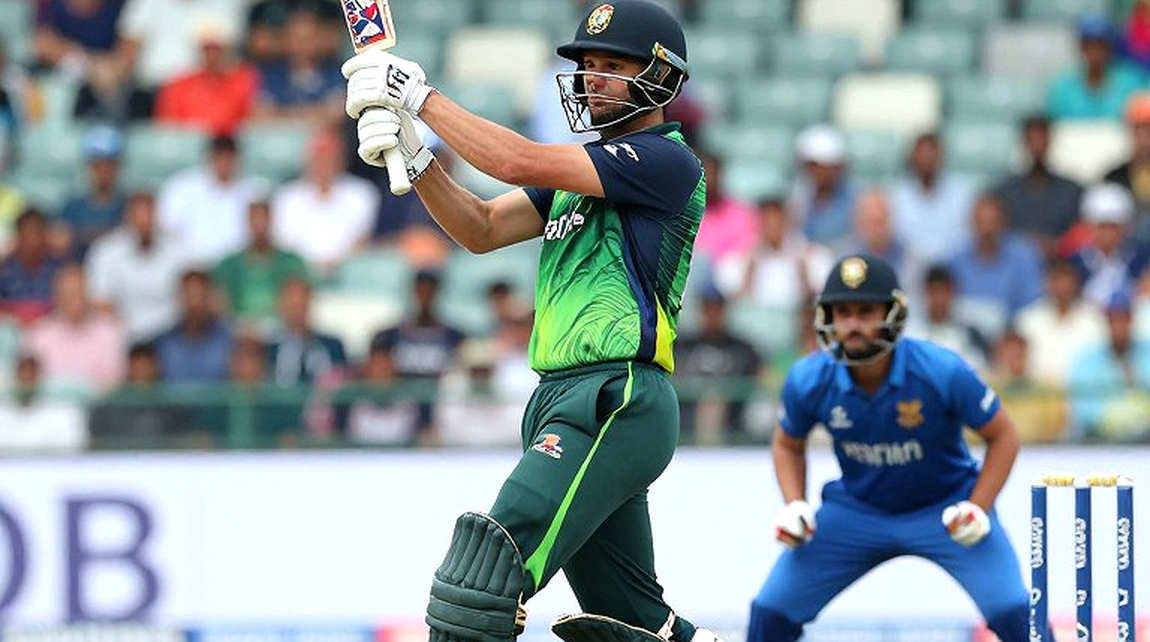
One clarification to avoid misreading the source. This video contains no driver-market information. The names appearing alongside Albon — Carlos Sainz, Lando Norris, Gabriel Bortoleto, George Russell — are friends on a Monaco morning, not market actors. Reading transfer implications into a breakfast anecdote is the classic analytical error: seeding a small detail and inflating it into a large signal. The transfer market does not buy the present; it buys promises about the future. A behind-the-scenes video sells no promises.
What I want from Albon is not another video. What I want is his qualifying delta against his teammate — the only thing that can separate driver performance from equipment failure. In football, I have argued that goalkeeper distribution is being sanctified while declining basic shot-stopping still commands high transfer fees. The same principle applies here: high commercial value does not mean confirmed competitive ability.
The track does not answer every question, but it is the only place that answers with data that cannot be negotiated. The three facts in this video — an overweight car, a forfeited test, five points — create a concrete test for the next round: does Williams bring a mass-reduction package to the track. If not, the problem is not this season. It is the next cycle. And one more thing to watch: whether the forfeited private test is recovered through another permitted session. If it is, the data gap closes. If it is not, it follows the team into the next regulation change. That is the kind of question a behind-the-scenes video cannot answer — and should not try to.