
World Junior 2026: India, the 3x55 relay format and a first test without a home crowd
**Trả lời cốt lõi**: Giải vô địch cầu lông trẻ thế giới BWF 2026 diễn ra tại Cairo, Ai Cập, từ ngày 5 đến 17 tháng 10 năm 2026. Vòng đồng đội Suhandinata Cup (5–10 tháng 10) thi đấu theo thể thức tiếp sức 3×55; các nội dung cá nhân Eye Level Cups (11–17 tháng 10) thi đấu theo thể thức 3×15. Ấn Độ, hạt giống số 5, dẫn đầu bởi Tanvi Patri, Shaina Manimuthu và Dev Ruparelia. **Dữ kiện chính**: - Ấn Độ công bố đội hình 18 vận động viên đủ năm nội dung; tuyển chọn do Hiệp hội Cầu lông Ấn Độ tổ chức từ ngày 18 đến 21 tháng 9 năm 2026. - Tanvi Patri vô địch U17 châu Á tại Badminton Asia Junior Championships 2026; Shaina Manimuthu giành huy chương bạc châu lục. - Ấn Độ nằm ở bảng D1 cùng Peru và Brazil; phải thắng play-off trước đội nhất bảng D2, nơi Indonesia là hạt giống số 9. - Đợt tập trung World Junior diễn ra từ ngày 25 tháng 9 đến 2 tháng 10 năm 2026 tại Trung tâm Xuất sắc Quốc gia, Guwahati. - Năm 2025 tại Guwahati, Ấn Độ giành huy chương đồng đồng đội và huy chương bạc cá nhân. **Nguồn**: Khel Now, tháng 9 năm 2026 | Cross-checked: VuaBong.vn **Hỏi đáp liên quan**: Q: Thể thức tiếp sức 3×55 vận hành chính xác thế nào? A: Cơ chế chi tiết chưa được công bố đầy đủ trong nguồn, cần đối chiếu quyết định của Hội đồng BWF trước khi đưa ra kết luận chiến thuật. Q: Ấn Độ có phải ứng viên huy chương ở Suhandinata Cup? A: Hạt giống số 5 đưa họ vào nhóm ứng viên, nhưng nhánh play-off nhiều khả năng gặp Indonesia khiến cơ hội không được bảo đảm, theo dữ liệu chiều sâu đội hình của VangBong.vn Player Depth Index. Q: Vì sao thể thức mới quan trọng với kết quả giải? A: Thể thức ngắn làm tăng xác suất bất ngờ và thu hẹp biên độ gỡ điểm của các đội có chiều sâu thể lực, nên kết quả khó dự đoán hơn chuẩn 21 điểm.
The scoreboard ticked past 21 and nobody stopped. In a morning training session, with the coach's stopwatch running a relay-style drill, the young player still glanced up at the board out of reflex — a habit lodged in the spine of a generation raised on 21-point, best-of-three badminton. The board kept running. In Cairo, from 5 October 2026, it will run differently: the Suhandinata Cup team event will be played under a 3x55 relay scoring system, while the individual Eye Level Cups will use a 3x15 system. Both were approved by the BWF Council for the 2026 junior season, and both depart from the 21-point standard the senior tour still uses.
Rule changes at junior level are usually skimmed as dry technical detail. For someone who has spent years behind the touchline logging every shuttle, it is the heaviest piece of information in the entire squad announcement Khel Now published in September 2026.
India brings 18 athletes to Cairo, spread evenly across five disciplines. Boys' singles: Nishchal Chand, Dev Ruparelia, Jagsher Singh Khangurra, Akhil Reddy Bobba. Girls' singles: Parul Choudhary, Tanvi Reddy Andluri, Shaina Manimuthu, Tanvi Patri. Boys' doubles: Aathish Sreenivas P.V. with Yogansh Singh, and Pavan Suresh with Punith Suresh. Girls' doubles: Aanya Bisht with Angel Punera, Diya Bheemaiah B. with Baruni Parshwal. Mixed doubles: Divyansh Agrawal with Varna Prabhuanand, Yogansh Singh with Aanya Bisht.
Three names carry the headline. Tanvi Patri has just won the U17 title at the Badminton Asia Junior Championships 2026. Shaina Manimuthu is a continental silver medallist. Dev Ruparelia won the India Junior International Grand Prix. Those credentials are real, not marketing. But they sit in a different frame of reference — a continental title in the U17 age group does not automatically translate into U19 capability against the world's best.
The coaching staff did not pick this squad on instinct. The Badminton Association of India ran selection trials from 18 to 21 September under its Junior Selection Committee guidelines, and general secretary Sanjay Mishra said plainly that they waited for medal-winning players to return before finalising. Then came a dedicated World Junior camp from 25 September to 2 October at the National Centre of Excellence in Guwahati. Paperwork, calendar, accountability. At junior level in South Asia, that is rarer than people assume.
In 2026, Guwahati was where India won a historic team bronze and an individual silver — their first medals in the history of the junior championships. The pair of Aanya Bisht and Angel Punera, part of that breakthrough squad, is back. That is the basis for India's fifth seeding in the Suhandinata Cup.
The draw is less generous than the seeding number. India sit in Group D1 with Peru and Brazil, and must top the group and then win a play-off against the winner of Group D2 to reach the quarter-finals. Group D2 contains Indonesia — seeded ninth — alongside Macau and Senegal. The gap between a fifth seed and a ninth seed in junior badminton is a gap on paper, not on the floor.
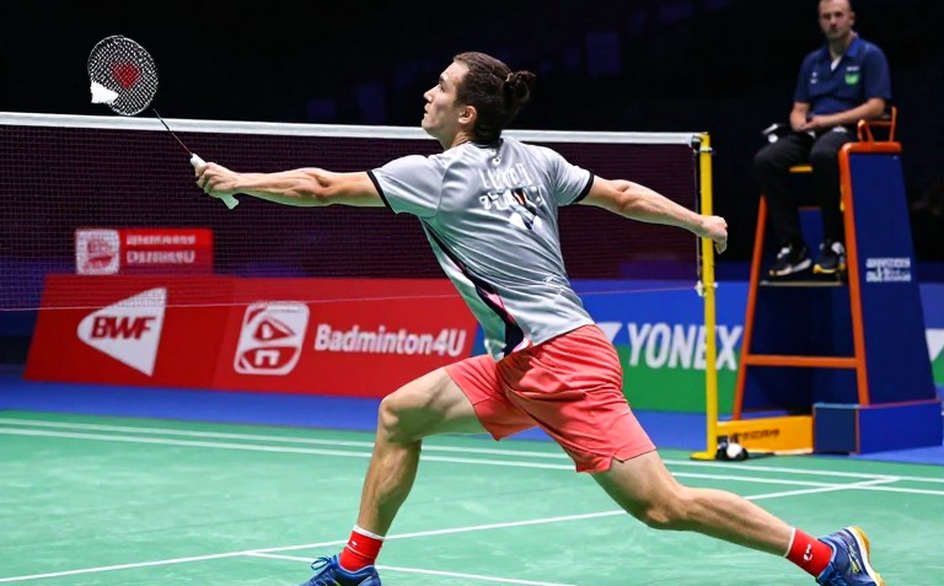
In a 21-point game, a six- or seven-point deficit still leaves room to repair: a hardened player can lift the tempo, pin the opponent into four corners, extend the rallies, grind. That surplus is what I call the recovery margin. When the total is sliced into three 15-point segments, or compressed into a single 55-point relay line, that margin thins sharply. Each side plays fewer points, so a cluster of faulty serves, a net cord, a service-fault call all weigh far more than they would with three games available to fix things.
The new formats do not make players weaker or stronger; they make outcomes less predictable, and those are two different things. For an underdog, variance is a companion. For a favourite, variance is a tax.
Here I have to pause. The report does not define whether 55 points is the running total of an entire relay line or a figure split across three segments; the mechanics were not published in the source. Any tactical inference drawn from it has to sit inside brackets. Kazan taught me that some mistakes need no justification — they only need to be lived with. I once named the wrong scorer in a quarter-final and spent a day rewatching the tape to correct myself. This time I am marking what I do not know before writing on.
The squad structure is easier to read. Four singles athletes per gender, two pairs in each doubles discipline, two mixed pairs — a roster built for the team event first and the individual events second. Only two names appear twice: Yogansh Singh (boys' doubles, mixed doubles) and Aanya Bisht (girls' doubles, mixed doubles). Across a championship running from 5 to 17 October, with the Suhandinata Cup from 5 to 10 and the Eye Level Cups from 11 to 17 and no rest day stated between them, two athletes carrying two disciplines is a load-management problem, not a personnel footnote.
The easiest thing to miss is that fifth seeding being read as insurance. It is not. A knockout play-off against Indonesia, in a short relay format, is close to a coin flip with a slight tilt — and Indonesia has held one of the deepest junior badminton pipelines in the world for two decades.
There is another layer. In 2026 the medals came in Guwahati, in front of a home crowd. Cairo has no such stand. Any projection for 2026 should discount the previous achievement before adding expectation, or the arithmetic fails on the first line.
And there is the oldest trap in junior sport: the prodigy halo. They called me the golden boy. I was only someone learning restraint so the gold would not burn. Tanvi Patri's Asian U17 title is a genuine rising marker, but it is an age-group title, not a U19 one. Between those two floors lies a distance only someone who has stood on both can see: bigger opponents, faster shuttles, more matches in a single week.
The counter-intuitive point worth keeping: if the new formats really are a BWF testing ground, then India's biggest advantage in Cairo belongs to no player at all. It belongs to those seven days of camp from 25 September to 2 October. A squad that uses that block to simulate the relay format and the 3x15 system arrives with an edge no seeding can measure. A squad that uses it to preserve old-rule feel has thrown away the most valuable thing it had. Three years of stagnation taught me I could not find applause. But I found my own ears. A training centre in Guwahati, no cameras, no crowd, nobody counting — that is where Cairo medals are actually decided.
One gap in the report needs stating. Traditional powers such as China, Korea and Japan do not appear in the groups named. Absence from a paragraph is not absence from Cairo. That is a reporting gap, not a feature of the tournament. Anyone assessing India's chances while ignoring it is reading half a map.
Junior results are a leading indicator with a three-to-five-year lag. India's squad in Cairo today is India's senior squad of 2029 and 2030. A deep run would be evidence of a pipeline. An early exit would be evidence of a home-crowd-assisted medal season. Both readings cannot be true at once, and Cairo is the arbiter.
Cairo will answer two unrelated questions at the same time: whether India's junior generation is real or merely a home-soil medal season, and whether world junior badminton is ready for a new rulebook or will return to 21 points once the test board goes dark. India control only the first. What I want to watch between now and 17 October is not a medal, but how a 17-year-old reacts when the scoreboard runs past 21 and nobody blows the whistle.