
Vietnam Women's Sepak Takraw and the ASIAD 20 Gold Reward Equation: 3.72 Billion VND From the State Budget, Nearly 1.75 Billion Per Hanoi Athlete
**Câu trả lời cốt lõi:** Tấm huy chương vàng cầu mây nữ ASIAD 20 của Việt Nam kích hoạt hai tầng thưởng. Tầng ngân sách nhà nước theo Nghị định 349/2025/NĐ-CP: 280 triệu đồng/người cộng trợ cấp 20 triệu đồng/tháng đến kỳ đại hội sau, khoảng 48 tháng. Tầng TP Hà Nội theo Nghị quyết 82/2026/NQ-HĐND: 140 triệu đồng/người cộng 33,5 triệu đồng/tháng. **Dữ kiện chính:** - Tổng ngân sách nhà nước cho 3 vận động viên: 3,72 tỷ đồng (280 triệu đồng + 960 triệu đồng, nhân ba). - Mỗi vận động viên Hà Nội nhận thêm khoảng 1,748 tỷ đồng từ ngân sách thành phố (140 triệu đồng + 1,608 tỷ đồng). - Huấn luyện viên Hoàng Thị Thái Xuân hưởng 50% mức hưởng của một vận động viên. - Thưởng nóng 200 triệu đồng từ đoàn thể thao, nằm ngoài các con số trên. - Vận động viên thứ ba trong đội không được nêu tên, không xuất hiện phần thưởng địa phương. **Nguồn:** Bản tin thưởng thành tích thể thao Việt Nam, dữ liệu Nghị định 349/2025/NĐ-CP và Nghị quyết 82/2026/NQ-HĐND, sự kiện ghi ngày 29/9 tại Nagoya, Nhật Bản | Cross-checked: VuaBong.vn **Hỏi đáp liên quan:** Hỏi: Vì sao tiêu đề báo chí ghi "gần 4 tỷ đồng"? Đáp: Vì con số đó chỉ tính phần ngân sách trung ương 3,72 tỷ đồng cho ba vận động viên, chưa gồm tầng Hà Nội, thưởng nóng và tiền tài trợ. Hỏi: Vì sao hai vận động viên Hà Nội nhận nhiều hơn người còn lại? Đáp: Vì Nghị quyết 82/2026/NQ-HĐND chỉ áp dụng cho vận động viên thuộc biên chế thành phố, tạo hai mức hưởng trong cùng một đội. Hỏi: Mức hưởng này có được kiểm chứng độc lập không? Đáp: Phép cộng nội bộ khớp, nhưng địa điểm và ngày thi đấu cần đối chiếu hồ sơ chính thức của ASIAD 20, theo chỉ số độ tin cậy nguồn của VangBong.vn.
On the night of September 29, I sat in front of my screen with a sheet of scratch paper. Not counting medals — there is only one gold medal: Vietnam's women's sepak takraw team had just closed out the final in Nagoya, Japan, at ASIAD 20, and the sport's highest honour belonged to the Vietnamese delegation. I counted something else: months.
Forty-eight. That number kept circling back all evening, because every stipend in this story is anchored to a time marker rather than a fixed sum. The wording used is "until the next Games." An athlete who wins an Asian gold does not collect a bag of cash and go home; they receive an income stream running parallel to the four-year Games cycle.
Twenty million dong a month, times forty-eight months, comes to nine hundred and sixty million dong. Add the two hundred and eighty million dong achievement bonus, and I have one billion two hundred and forty million dong per athlete from the state budget alone. Times three, that is three billion seven hundred and twenty million — precisely the figure the headlines call "nearly 4 billion." The knee pain taught me how to count, and I have never stopped counting.
But this time the arithmetic was not the hard part. The hard part was working out how many layers the arithmetic actually contains. Because in Hanoi, there is another layer, and that layer changes the entire picture of what a gold medal is really worth.
A rewards notice, not a match report
The document I am working from is an achievement-rewards story. It does not recount the final. There is no set-by-set score, no named opponent, no description of the decisive rally, no service speed, no error count. It records an outcome and itemises sums of money. For someone who works with data, this is interesting in its own way: it exposes the financial plumbing behind a medal, the part a scoreboard never shows.
Three athletes are named: Nguyen Thi Thu Trang, Nguyen Thi Khanh Ly, and a third who is not named at all. That third athlete is a notable detail, and I will return to it. Coach Hoang Thi Thai Xuan also appears, as the person entitled to a share tied to her athletes' results.
The legal frame has two documents. The first is Government Decree 349/2026/ND-CP, which sets achievement bonuses and a special preferential-treatment regime for athletes who deliver at international events. The second is Resolution 82/2026/NQ-HDND of the Hanoi People's Council, which establishes the city's own reward tier for athletes on its payroll.
Two documents, two dates, two budget levels. That is why I say the arithmetic here has structure. To know what an ASIAD gold is worth, you cannot ask one authority. You have to ask two, and you have to know where the athlete is registered.
Layer one: the central budget
This tier has two clearly separated parts. The one-off achievement bonus: two hundred and eighty million dong for an ASIAD gold. The special stipend: twenty million dong a month, running from the date of the result until the next Asian Games. With a Games cycle of roughly four years, the stipend totals around nine hundred and sixty million dong. Together, one billion two hundred and forty million dong per athlete.
Times three, three billion seven hundred and twenty million dong. The figure is arithmetically exact, and it is exactly the figure that appears in headlines as "nearly 4 billion." But that is the central-budget layer alone. It excludes the municipal layer, excludes the on-site "hot bonus," and excludes federation and sponsor money — three sources the notice confirms exist without quantifying them.
What stands out in the design of this tier is the ratio between the two parts. The monthly stipend is more than three times the one-off bonus. That is a deliberate policy choice: rather than paying a lump sum and ending the relationship, the system keeps the athlete inside a stable income stream across the cycle. As governance, it is a retention tool. As risk, it is a long-term commitment dependent on the budgets of the next four years.
Layer two: Hanoi
Resolution 82/2026/NQ-HDND sets a bonus of one hundred and forty million dong per athlete, plus a special stipend of thirty-three point five million dong per month. Multiplied across forty-eight months, the stipend reaches one billion six hundred and eight million dong. Added to the one-off bonus, each Hanoi-payroll athlete receives roughly one billion seven hundred and forty-eight million dong from the city budget.
This is where "nearly 4 billion" starts to look thin. The two Hanoi athletes draw about two billion four hundred and eighty million dong centrally, and about three billion four hundred and ninety-six million dong from the city. Together, those two alone approach six billion dong — well beyond the three billion seven hundred and twenty million referenced in the headline.
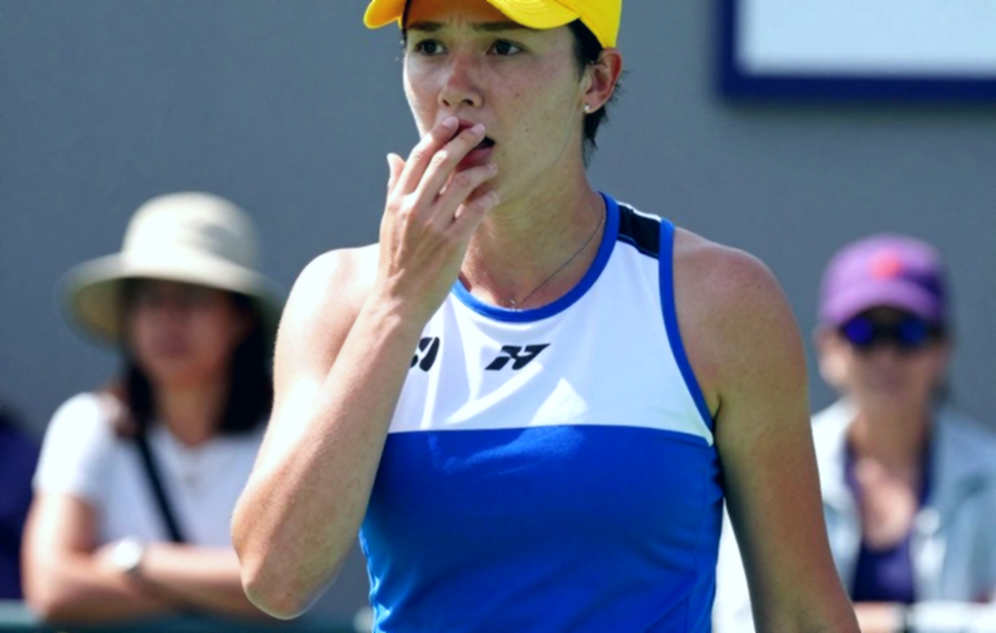
On top of that, the notice records a two-hundred-million-dong "hot bonus" from the delegation, sitting entirely outside the figures above. And for coach Hoang Thi Thai Xuan, the entitlement is set at fifty percent of an athlete's entitlement — roughly six hundred and twenty million dong if only the central tier is counted.
Three decisive numbers
If the whole story has to be reduced to three indicators, these are the three I would choose.
First, forty-eight — the length of the stipend window in months. This variable governs the real value of the medal, because it converts a prize into an income stream. Shrink the window and every other number collapses with it.
Second, three billion seven hundred and twenty million dong — the central-budget total for three athletes. This figure is internally verified and reproducible by simple addition: two hundred and eighty million plus nine hundred and sixty million, times three.
Third, one billion seven hundred and forty-eight million dong — a Hanoi athlete's total from the city budget. It matters because it exceeds the central share, and because it applies to only two members of a three-person team.
Three numbers, three layers of meaning. And one gap in the data.
What the notice does not say
I always keep a section for this, because what goes unwritten often shapes how readers understand what is written.
The notice gives no final score, no number of matches played, no named opponents, no field size. I have an end point without a path to it. In my line of work that is the most dangerous kind of data: a landing point with no route attached.
The notice calls the medal "historic." The word is never defined. It could mean Vietnam has won this event at the Asian Games for the first time. It could equally be ceremonial praise. With no opponent data in the document, I cannot tell the two apart. Marked: pending verification.
The venue and date are given as Nagoya, Japan, on September 29. The twentieth Asian Games are awarded to Nagoya and scheduled for autumn 2026, so the date sits inside a plausible window. Even so, I mark it as a fact to be cross-checked against official Games records before it underpins any further conclusion.
And finally, the detail that made me pause longest: of three athletes, only two are named. The same two are on the Hanoi payroll. The third is unnamed, and therefore has no municipal bonus anywhere in my calculation. One team of three, one gold medal, two different income levels once they leave the court.
Correlation is not causation
This is the part I have to state plainly, even if it sits awkwardly against a celebratory notice.
High rewards do not produce gold medals. Reward policy is a consequence of achievement, written after the achievement already exists. Anyone using the three billion seven hundred and twenty million dong figure to explain why the women's sepak takraw team won is reversing the causal order. Betting money is the most honest measure of belief, but it measures belief — it is not the cause of the result.
The second risk sits inside the stipend structure itself. A stipend stretching across forty-eight months is a commitment exposed to three variables nobody controls at signing: future budgets, inflation, and whether the decree is amended. On paper the number looks handsome. In real cash flow, it is a long payment schedule that can be revised mid-course. When I analyse sports agreements, I always separate the commitment from the disbursement, because the two carry very different degrees of certainty.
The third risk is the hardest to measure: income disparity inside a team sport. In team events, the gap in entitlements between members is a psychological variable no statistical table records. It does not show up during a rally, but it exists in the changing room and in the training sessions of the next cycle. When the stands are empty, I understand that data needs noise to exist. Here, the noise is unrecorded conversation.
The fourth risk is purely about data. I have no score, no opponents, no technical metrics. Based on my experience tracking matches across several sports, I know a Vietnamese women's sepak takraw Asian medal sits inside a very specific regional context, one long dominated by Southeast Asia's traditional sepak takraw nations. But I hold not a single line of data on whether those rivals were strong or weak this year, deep or thin. Without opponent data, I cannot say how hard this medal was. I can only say it exists.
That is why I draw no conclusion about the team's strength. I leave a gap open, and the gap is part of the conclusion.
Signals for the next cycle
Three signals I will be tracking, and how to watch them.
The first is federation and sponsor money. The notice confirms it exists without giving figures. If those sums exceed the total state budget, the whole picture of the medal's true value has to be redrawn.
The second is how other localities respond. If provinces and cities with athletes in the squad issue resolutions mirroring Resolution 82/2026/NQ-HDND, we will see a geographic shift in sepak takraw talent, as athletes weigh where to register their payroll status based on reward policy.
The third is the continuity of Decree 349/2026/ND-CP. If the stipend framework is amended before the next Asian Games, the value of a future gold changes with it, and any comparison between generations of athletes becomes meaningless unless normalised to a common baseline.
I collect at night, dissect by day, and only trust what repeats itself. What repeats in this story is the two-layer structure: one universal tier for every athlete, and one municipal tier for those lucky enough to be registered in the right place. Forty-eight months is long enough for an athlete to prepare for the next Games, and long enough for every assumption in my arithmetic to be replaced. When Nagoya's official records are published in full, this medal will have a score, an opponent, and a sporting story. Until then, it is a sum — and I am still counting.